Tuesday, June 9, 2015

Advances in Neuroimaging for Amyotrophic Lateral Sclerosis

May 22, 2015

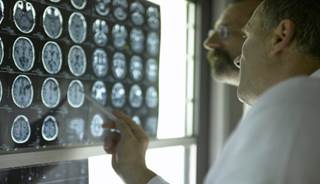
Amyotrophic lateral sclerosis (ALS) is a neurodegenerative disorder characterized by progressive muscular paralysis reflecting degeneration of motor neurons in the primary motor cortex, brain stem, and spinal cord. 
Diagnosing ALS in the early stage of the disease can be difficult because of variable presentation, and common mimic disorders, according to Erik Pioro, MD, PhD, director of the section of amyotrophic lateral sclerosis and related disorders at Cleveland Clinic.

Wednesday, February 11, 2015

Addressing Depression, Anxiety, and Fatigue in Multiple Sclerosis

February 09, 2015


Addressing Depression, Anxiety, and Fatigue in 
Multiple Sclerosis

Physical and mental comorbidities that affect treatment compliance and quality of life are common in patients with multiple sclerosis and are associated with adverse outcomes. The link between psychological disorders, such as depression and anxiety, and physical conditions, including chronic fatigue and chronic pain, is problematic because so many of the symptoms overlap. (published site)

Saturday, February 7, 2015

Stroke in Young Adults: Risk Factors and Prognosis


Stroke is often considered an older person's disease, but an estimated 10% of stroke patients are younger than 50. Recent reports show an apparent increasing trend in ischemic stroke among young adults, a figure that is particularly concerning when compared to the overall decrease in stroke incidence and mortality. Although certain rare risk factors have been suggested as possible causes, reports show that traditional risk factors for stroke actually may be overlooked in this population. (published site)

Monday, December 8, 2014

Risks and Benefits of Antidepressant Use in Pregnancy

Antidepressant use in pregnancy
Psychiatry Advisor
Michael O'Leary

In a common enough scenario, a pregnant patient being treated for depression or anxiety reads an article that links maternal antidepressant use during pregnancy with birth defects and wonders whether she should stop taking the medication. (published site)

Thursday, November 20, 2014

Treating Comorbid Sleep, Neurological Disorders

Neurology Advisor


The Challenges of Diagnosing and Treating Sleep
Disorders

The range of sleep disorders neurologists treat is wide and includes insomnia, sleep apnea, restless legs syndrome, and narcolepsy.

Primary sleep disorders are caused by endogenous abnormalities in the mechanisms regulating the sleep-wake cycle. Secondary sleep disorders stem from comorbid conditions, including neurodegenerative diseases such as Parkinson's disease or Alzheimer's disease, or psychiatric disorders that can cause disruptions in  normal sleep-wake mechanisms.(published site)

Friday, November 14, 2014

Diagnosing and Treating Rapidly Progressive Dementias

November 10, 2014


Dementia
Dementia may result from as many as 40 different diseases and conditions ranging from dietary deficiencies to inherited diseases, according to the Encyclopedia of Mental Disorders.1
With that, the definition of dementia has broadened over time from a focus on memory loss to a focus on impairment in one or more cognitive domains — particularly memory, language, frontal executive function, organizing, planning, and multitasking — that is severe enough to interfere with a person's daily function.1
(published site)

Thursday, November 13, 2014

Diagnosing Deep Venous Thrombosis

John Neil, MD,
SMIL radiologist
SMIL Radiology Report
According to the Centers for Disease Control and Prevention, the precise number of people affected by deep vein thrombosis and pulmonary embolism is unknown, but estimates range from 300,000 to 600,00 people in the United States. 

The disease course of acute deep vein thrombosis (DVT) ranges from complete resolution over time to embolization to scarring with varying degrees of obstruction, vein damage and malfunctioning venous valves. (published site